
Before recommending anything, we actually test how your lock behaves — where it catches, how much resistance there is, whether it’s the cylinder or the frame. That diagnosis is what separates a lasting fix from a lucky guess.
We’d rather spend ten extra minutes diagnosing a lock properly than rush a fix that fails again in a fortnight. Every repair across St Lucia gets that same careful attention, no shortcuts taken.
A struggling lock deserves proper diagnosis, not a rushed guess. Our verified technicians test the mechanism thoroughly, without unnecessary replacement, so you’re only paying for what genuinely needs fixing.
If your door, not the lock, is causing the issue, that’s exactly what we’ll fix instead.
Every technician shows proper ID before opening a toolbox, so you know precisely who’s handling your home’s security repairs.
Repeatedly forcing a key that’s already resisting can gradually bend internal components, turning a minor stiffness into a genuine mechanical problem. This often results from frustration rather than any single dramatic event. Our technicians assess and repair the internal damage carefully. This is especially common in locks that have been struggling for a while already. Reliable repair restores smooth, dependable function.

Homes closer to the river or exposed to consistent moisture can see faster corrosion build-up inside exterior lock mechanisms than expected. This often results in gradual stiffness that’s easy to dismiss at first. Our technicians clean and repair affected components properly. This is especially common in older St Lucia homes near the water. Reliable repair extends the lock’s genuine working life.
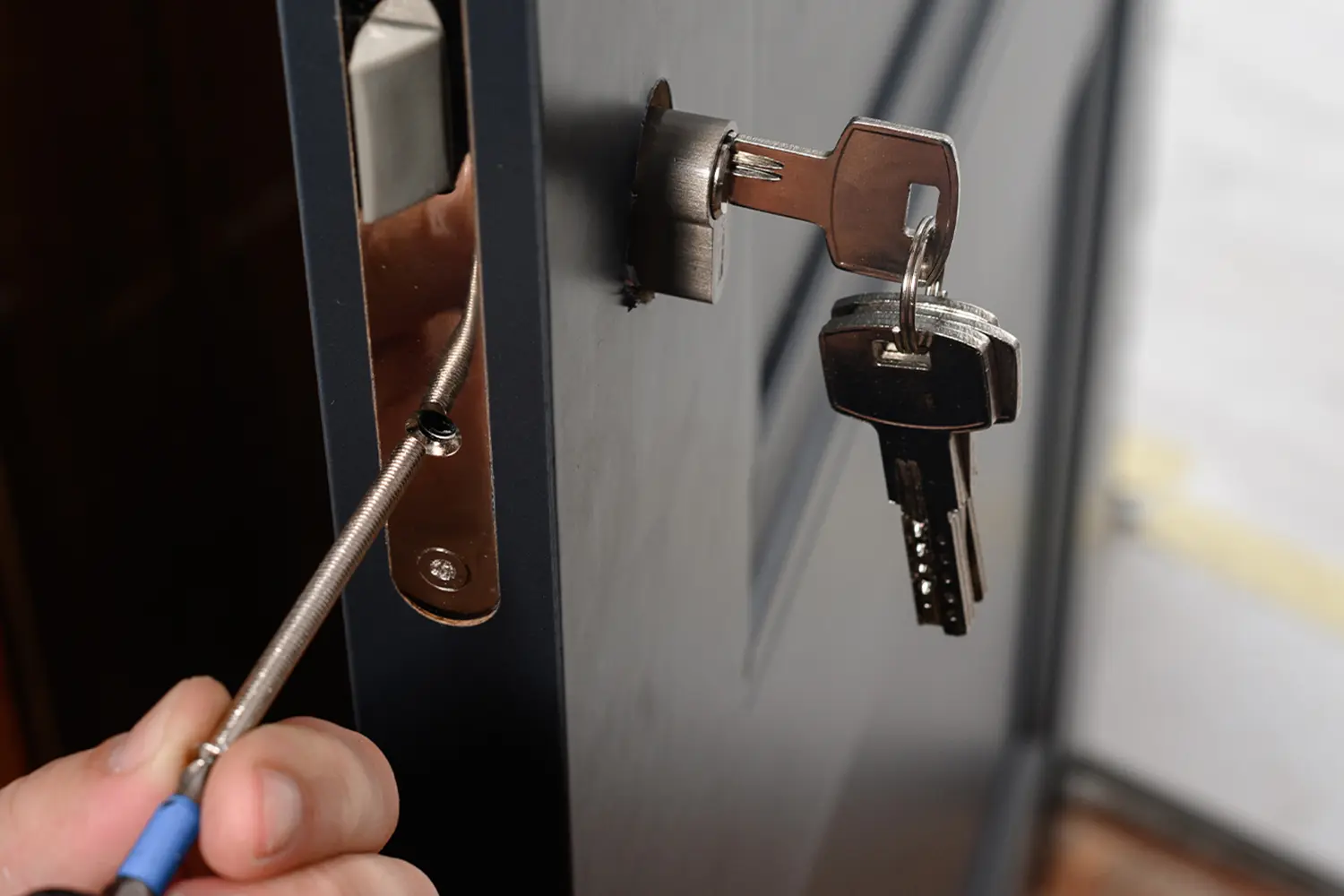
A door handle that’s worked itself loose over time can throw off how the connected lock mechanism engages and releases. This often results from ordinary daily use gradually loosening fixing screws. Our technicians tighten and repair the assembly as needed. This is especially common in high-traffic doors used multiple times daily. Reliable repair resolves the issue at its actual source.

Doors near busy roads or regular heavy traffic can experience subtle, ongoing vibration that gradually loosens internal lock components over time. This often results in a lock that slowly becomes less precise. Our technicians identify and correct the resulting wear. This is especially common on ground-floor units facing busier St Lucia streets. Reliable repair restores consistent, dependable operation.
Every struggling lock eventually raises the same question — is this worth fixing, or does it genuinely need to be replaced? Guessing wrong either way usually means paying for work you didn’t need. Here’s how to actually tell the difference, and what proper diagnosis from Locksmith St Lucia looks like before any tools come out.
A key that’s always been a touch stiff isn’t necessarily cause for concern. A key that’s suddenly become noticeably harder to turn over the past week or two usually signals something actively worsening. A lock that feels physically loose in the door, wobbling slightly when touched, points toward a hardware or frame issue rather than the internal mechanism.
A rushed technician might hear “the key’s sticking” and jump straight to replacing the whole cylinder without a second thought. A more careful approach involves actually testing the lock — checking for debris buildup, testing alignment with the strike plate, feeling for specific resistance points — before deciding whether it’s a clean-out, an alignment fix, or genuinely time for new hardware altogether.
A surprising number of “lock problems” aren’t really about the lock at all. Homes settle gradually over the years, and that subtle shift can throw a door’s alignment off just enough that a perfectly functional lock starts struggling to engage properly with the strike plate. Adjusting the strike plate’s position often solves the entire issue without needing to touch the lock itself.
A lock that’s been pried at might still turn and lock normally on the surface, while carrying hidden internal damage that quietly weakens its actual resistance to a second attempt. Any lock showing signs of tampering deserves a proper, thorough inspection, regardless of whether it still seems to function normally day to day.
A malfunctioning lock doesn’t automatically mean an expensive replacement is required. In plenty of cases, a careful, well-diagnosed repair restores full function at a fraction of the cost. Locksmith St Lucia is built on accurate diagnosis and honest recommendations — the kind of approach that actually solves the problem, rather than papering over it for a few weeks before it inevitably comes back again.
Same-Day Appointments Available

Yes, this is often caused by the same internal wear affecting the turning motion, and it's addressed as part of a full repair.
Yes, individual doors wear at different rates depending on use, weather exposure, and how often they're opened.
Yes, we test the lock's operation with you present, so you can confirm it's working properly before the job is finalised.
Temperature changes can cause slight metal contraction, which is worth mentioning so we can assess whether it's seasonal or a deeper issue.
Hinges are a separate component, though we can advise whether they're contributing to the lock issue during the same visit.
